NinjaTMS
C.H. Robinson deflects safety blame to FMCSA after CBS exposé
Broker giant says federal government vets carriers, not brokers — as Supreme Court weighs who pays when crashes kill
C.H. Robinson told the public Sunday it relies on FMCSA to vet carriers after CBS News reported the broker had hired thousands of trucking companies with safety violations, including dozens with hallmarks of chameleon carriers.
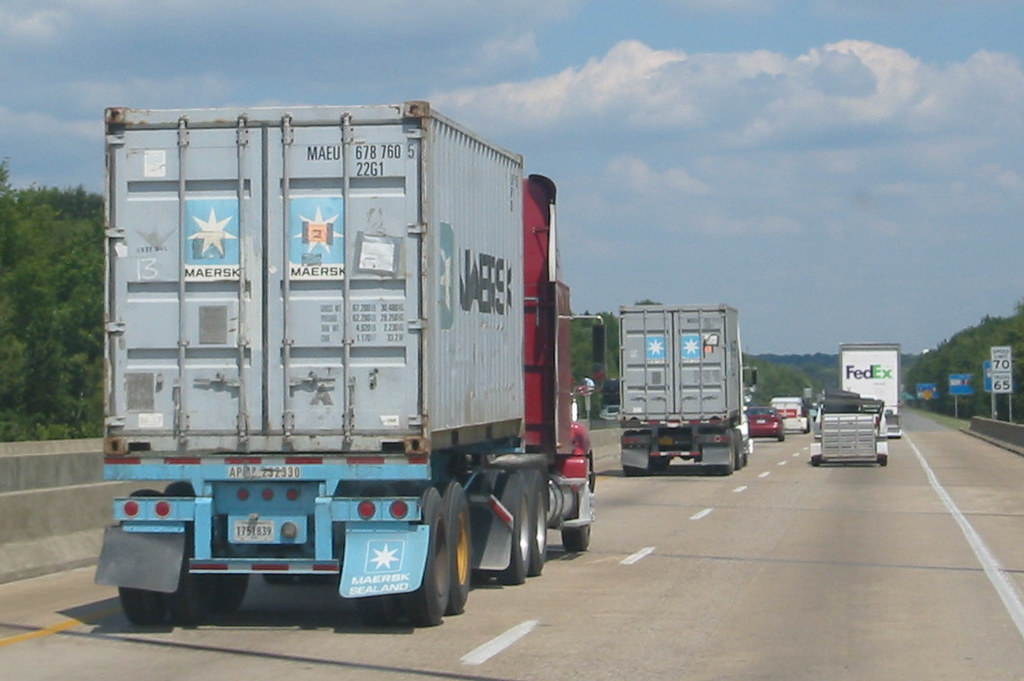
The 3PL's defense came hours after CBS aired a segment linking brokers to unsafe carriers staying on the road. The network singled out C.H. Robinson for contracting with operators who reconstitute under new names to hide poor safety records — same trucks, same owners, new DOT number. CBS declined to say how many such carriers C.H. Robinson had used, but reported the figure was in the dozens.
What C.H. Robinson said
The broker's statement opened with sympathy for families affected by roadway tragedies, then pivoted to its safety record: one serious accident claim per 500 million miles driven on customer loads. The company said it supports Dahlila's Law, HR 5688, which passed the House Transportation & Infrastructure Committee in March but has seen no further action. The Senate companion bill, S 3917, has no scheduled movement.
Dahlila's Law centers on English proficiency for drivers. It does not mention brokerages.
C.H. Robinson said it works exclusively with carriers vetted and licensed by FMCSA. The broker argued the federal agency has access to confidential driver records and data no broker can obtain, giving FMCSA the authority and expertise to evaluate carrier safety. When a carrier receives an unsatisfactory rating, loses insurance, or has its DOT number suspended, C.H. Robinson said its technology notifies the company as soon as FMCSA releases that information. The carrier is then automatically blocked from booking loads.
The Montgomery case looms
C.H. Robinson's response ties directly to arguments it made before the Supreme Court in March in Montgomery vs. Caribe Transport II. The case asks whether the Federal Aviation Administration Authorization Act preempts state courts from holding brokers liable for carrier crashes. Specifically: does F4A's safety exception — which allows states to pursue actions "with respect to motor vehicles" — include brokerages?
C.H. Robinson was an initial defendant in the case after hiring Caribe Transport II, whose truck struck driver Shawn Montgomery in Illinois in December 2017. The 7th Circuit removed C.H. Robinson from the proceedings on appeal. The Supreme Court granted certiorari to resolve conflicting circuit court decisions on broker liability. A ruling is expected by the end of June.
The broker's statement said the case is not about immunity but about whether federally licensed freight brokers can be held responsible under varying state laws for the actions of an independent motor carrier involved in an accident, despite federal law distinguishing brokers from carriers. The technical issue is preemption.
Chameleon carriers and Dahlila Coleman
CBS also cited President Donald Trump's mention in his State of the Union address of injuries suffered by Dalilah Coleman in 2024. Partap Singh, an Indian immigrant driving the truck that struck Coleman, was in the country illegally but held a CDL from California, according to the Department of Homeland Security. C.H. Robinson is a defendant in the California Superior Court action filed by Coleman's parents.
Marcus Coleman, Dalilah's father, told CBS: "Trust me, I'm upset with the driver, I'm upset with the carrier, but if we don't go after the broker, this is going to continue happening."
CBS reported its investigation revealed C.H. Robinson had hired thousands of trucking companies with a history of safety issues. The network said dozens had hallmarks of chameleon carriers — operators that paper over poor safety records by reconstituting under a new name.
C.H. Robinson said recent media coverage contains inaccurate and misleading characterizations of the company and the role of a freight broker within the transportation system. The broker said media attention to the industry is being driven by the Montgomery case, which challenges whether safety accountability remains at the federal level with FMCSA or shifts to a patchwork of state-level standards that would create inconsistency without improving roadway safety.
Two fears in the brokerage industry
Based on conversations and public statements at the Transportation Intermediaries Association Capital Ideas Conference in metro Phoenix last week, two fears are permeating the 3PL industry. One is that C.H. Robinson will lose in the Supreme Court and the industry's exposure to liability claims could explode. The second is that even if C.H. Robinson prevails, Congress could amend F4A to make clear that states can pursue safety-related actions against 3PLs — that "with respect to motor vehicles" includes brokerages.
What this means for drivers and fleets. If the Supreme Court rules against C.H. Robinson, brokers will face state-level liability for carrier crashes. That could change how brokers select carriers — potentially tightening vetting beyond FMCSA's minimum standards. If Congress amends F4A after a C.H. Robinson win, the result is the same: brokers on the hook, carriers under more scrutiny. For owner-operators and small fleets, expect brokers to demand more safety documentation, more frequent checks, and faster responses to FMCSA rating changes. Chameleon carriers — the ones rebranding to dodge bad records — may find it harder to get loads if brokers face real liability. But if FMCSA remains the sole gatekeeper, as C.H. Robinson argues it should, nothing changes Monday morning. The agency's vetting process stays as it is, and brokers keep relying on federal data drivers already know is incomplete.